India to Acquire 114 Rafale Fighter Jets: A Strategic Leap Under the Make in India Framework
India is set to significantly strengthen its air combat capabilities with the government reportedly clearing a massive Rs 3.25 lakh crore deal for 114 Rafale fighter jets. The proposed acquisition marks one of the largest defence procurement programs in India’s history and represents a critical step in modernising the Indian Air Force (IAF) amid evolving regional security challenges.
Beyond the scale of the investment, what makes this deal particularly significant is its strong emphasis on domestic manufacturing, with nearly 80 percent of the aircraft expected to be built in India and indigenous content projected to reach up to 60 percent under the Make in India initiative.
This development signals not just a defence upgrade, but also a strategic push toward defence self-reliance and industrial growth.
The Background: Strengthening India’s Air Power
The Indian Air Force has long faced concerns over a declining number of fighter squadrons. While the sanctioned strength of the IAF stands at 42 squadrons, operational strength has hovered well below that mark in recent years due to the retirement of aging MiG-21 and other legacy aircraft.
The earlier procurement of 36 Rafale jets from France, delivered beginning in 2020, marked a major upgrade in capability. Those aircraft are currently deployed in strategic bases and have enhanced India’s operational readiness, particularly along sensitive borders.
However, the requirement for additional modern multi-role fighter aircraft led to the launch of a broader procurement program under the Multi-Role Fighter Aircraft (MRFA) framework. The clearance for 114 Rafale jets appears to be a continuation and expansion of this modernization strategy.
What the New Deal Includes
According to sources, the proposed deal for 114 Rafale fighter jets is valued at approximately Rs 3.25 lakh crore. This makes it one of the largest defence contracts ever undertaken by India.
Key highlights of the proposed agreement include:
-
Acquisition of 114 advanced Rafale fighter aircraft
-
Nearly 80% of the jets to be manufactured in India
-
Indigenous content potentially reaching 60%
-
Significant technology transfer components
-
Local manufacturing partnerships with Indian defence firms
The plan aligns with India’s broader goal of building a robust domestic aerospace and defence ecosystem, reducing dependence on imports while strengthening strategic autonomy.
Make in India: A Shift Toward Defence Self-Reliance
One of the most transformative aspects of the proposed Rafale deal is its alignment with the Make in India framework. Unlike the earlier 36-jet acquisition, which was largely a direct purchase, the new agreement emphasizes large-scale domestic production.
If implemented as outlined:
-
The majority of aircraft will be assembled and produced in India.
-
Indian defence manufacturers will participate in supply chains.
-
Indigenous components will form a substantial portion of the aircraft systems.
-
Technology transfer arrangements will enhance India’s design and production capabilities.
This approach supports the government’s push toward Atmanirbhar Bharat (self-reliant India) in defence production. Over the past few years, India has sought to boost domestic manufacturing through policy reforms, increased defence capital budgets, and restrictions on certain defence imports.
By manufacturing a majority of these jets domestically, India aims to:
-
Create employment in high-technology sectors
-
Strengthen local supply chains
-
Develop long-term aerospace engineering capabilities
-
Reduce foreign exchange outflow in future procurements
Why Rafale?
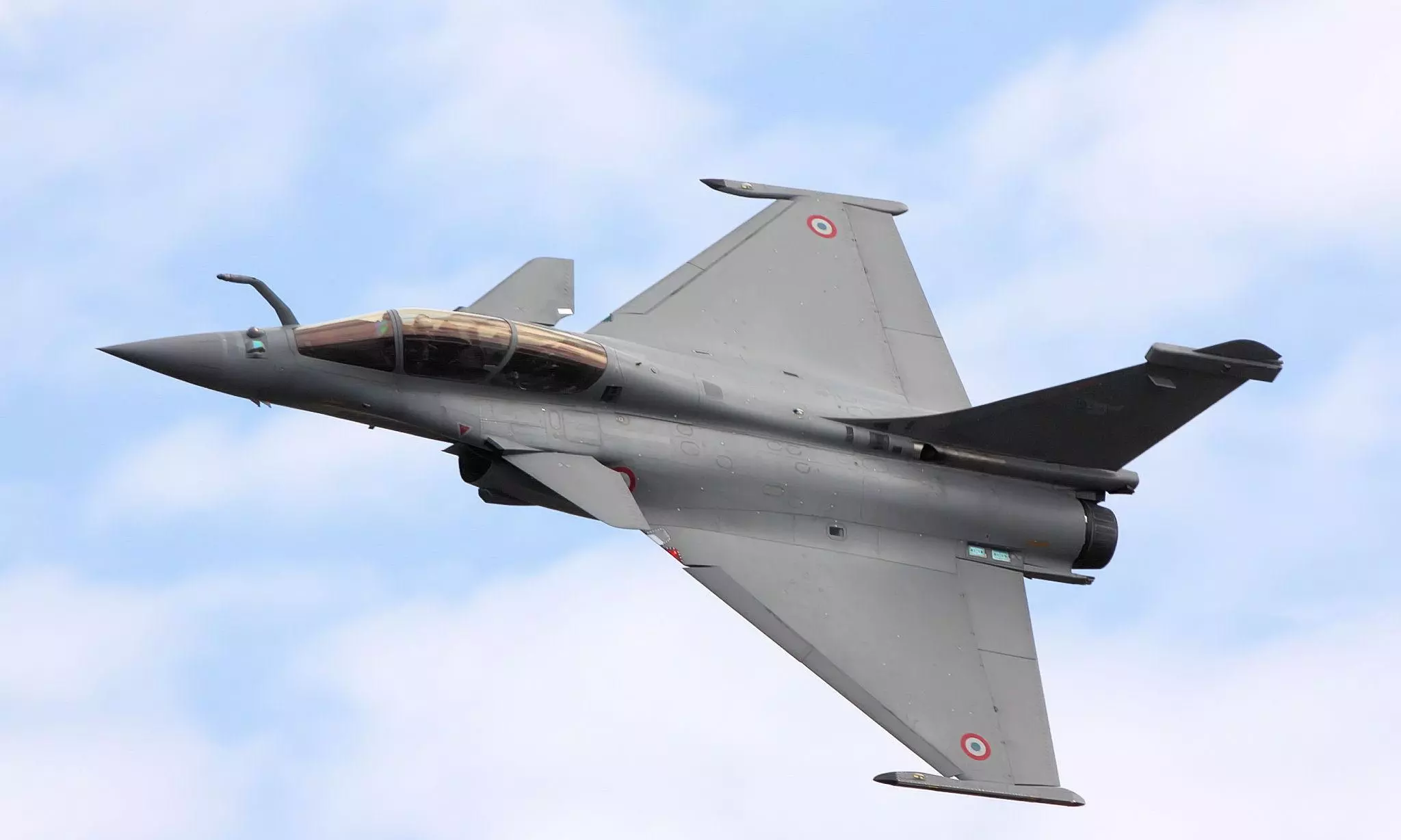
The Rafale fighter jet, developed by France’s Dassault Aviation, is considered one of the most advanced multi-role combat aircraft in the world. It is capable of performing a wide range of missions, including:
-
Air superiority
-
Ground attack
-
Reconnaissance
-
Maritime strike
-
Nuclear deterrence roles
The aircraft is equipped with advanced avionics, radar systems, electronic warfare capabilities, and beyond-visual-range missile systems. The 36 Rafale jets currently in service with the Indian Air Force have already demonstrated enhanced operational performance during joint exercises and deployments.
The decision to expand the Rafale fleet likely reflects the IAF’s satisfaction with its performance, logistics compatibility, and operational flexibility.
Strategic Implications for India
The procurement of 114 Rafale jets carries significant strategic weight in the regional security context. India shares borders with two nuclear-armed neighbors, both of whom are rapidly modernizing their military capabilities.
Key strategic implications include:
1. Restoring Squadron Strength
With older aircraft being phased out, the induction of 114 new fighter jets would help close the gap between current and sanctioned squadron strength.
2. Enhanced Deterrence
Advanced fighter jets with modern weapons systems improve deterrence capability along both western and northern fronts.
3. Multi-Front Readiness
Given evolving geopolitical dynamics, maintaining readiness for potential two-front scenarios remains a strategic priority for India.
4. Technology Upgradation
Large-scale production with technology transfer strengthens India’s long-term ability to design and build advanced combat platforms.
Economic and Industrial Impact
A defence deal of this magnitude extends beyond military considerations. The economic implications are substantial.
Boost to Aerospace Sector
Domestic manufacturing of nearly 80 percent of the jets would require:
-
Advanced assembly lines
-
Skilled aerospace engineers
-
Component manufacturing units
-
Research and development collaborations
This could stimulate India’s aerospace ecosystem and encourage joint ventures between global defence companies and Indian firms.
Job Creation
Large defence production programs typically generate employment across multiple tiers:
-
Direct jobs in aircraft assembly
-
Indirect jobs in component manufacturing
-
Ancillary industry growth in logistics and supply chains
Long-Term Capability Building
Indigenous content reaching up to 60 percent signals growing technical competence in avionics, materials engineering, and systems integration. Over time, this expertise can feed into future indigenous programs such as the Advanced Medium Combat Aircraft (AMCA).
Financial Considerations
At Rs 3.25 lakh crore, the proposed deal represents a significant financial commitment. However, defence analysts often emphasize that long-term capability enhancement, domestic manufacturing benefits, and strategic security gains justify such investments.
Spreading production over several years can ease fiscal pressure while ensuring steady industrial activity.
Furthermore, higher domestic content reduces lifecycle costs and strengthens maintenance capabilities within the country, potentially lowering long-term dependence on foreign suppliers.
Challenges Ahead
While the proposed deal is ambitious, successful execution will depend on several factors:
-
Finalization of detailed contract terms
-
Clear technology transfer agreements
-
Timely establishment of manufacturing infrastructure
-
Effective coordination between foreign OEMs and Indian partners
Large defence projects often face delays due to negotiations, cost escalations, and compliance requirements. Ensuring transparency and efficiency in implementation will be crucial.
The Road Ahead
If formally concluded and implemented, the 114 Rafale jet acquisition would mark a transformative chapter in India’s defence modernization journey. It combines three core objectives:
-
Strengthening air combat capability
-
Promoting indigenous defence manufacturing
-
Building long-term aerospace technological capacity
The deal reinforces India’s intent to balance immediate operational needs with strategic industrial development.
Conclusion
The reported clearance of a Rs 3.25 lakh crore deal for 114 Rafale fighter jets represents a landmark moment in India’s defence strategy. By combining advanced military capability with large-scale domestic production under the Make in India framework, the government aims to enhance national security while fostering industrial growth.
With nearly 80 percent of the aircraft expected to be manufactured domestically and indigenous content potentially reaching 60 percent, the program goes beyond procurement — it becomes a cornerstone of India’s long-term defence self-reliance vision.
As the deal moves toward finalization, it will be closely watched not only for its strategic implications but also for its economic and technological impact on India’s growing aerospace ecosystem.
afrikato afrikato afrikato afrikato afrikato afrikato afrikato afrikato afrikato afrikato afrikato afrikato afrikato afrikato afrikato afrikato afrikato afrikato afrikato afrikato afrikato afrikato afrikato afrikato afrikato afrikato afrikato afrikato afrikato afrikato afrikato afrikato afrikato afrikato afrikato afrikato afrikato afrikato afrikato afrikato afrikato afrikato afrikato afrikato afrikato afrikato afrikato afrikato afrikato afrikato afrikato afrikato afrikato afrikato afrikato afrikato afrikato afrikato afrikato afrikato afrikato afrikato afrikato afrikato afrikato afrikato afrikato afrikato afrikato afrikato afrikato afrikato afrikato afrikato afrikato afrikato afrikato afrikato afrikato afrikato afrikato afrikato afrikato afrikato afrikato afrikato afrikato afrikato afrikato afrikato afrikato afrikato afrikato afrikato afrikato afrikato afrikato afrikato afrikato afrikato afrikato afrikato afrikato afrikato afrikato afrikato afrikato afrikato afrikato afrikato afrikato afrikato afrikato afrikato afrikato afrikato afrikato afrikato afrikato afrikato afrikato afrikato afrikato afrikato afrikato afrikato afrikato afrikato afrikato afrikato afrikato afrikato afrikato afrikato afrikato afrikato afrikato afrikato afrikato afrikato afrikato afrikato afrikato afrikato afrikato afrikato afrikato afrikato afrikato afrikato afrikato afrikato afrikato afrikato afrikato afrikato afrikato afrikato afrikato afrikato afrikato afrikato afrikato afrikato afrikato afrikato afrikato